The world is growing hungrier despite having the solutions in front of us.
Today, 266 million people across 47 countries are facing crisis-level acute hunger. Roughly 80% of the U.S. population, when put into perspective. Compounding this scarcity, half of the global population endures severe water stress for at least one month each year, driven by population growth and resource-heavy industrial expansion.
Yet the paradox of this crisis lies in how we farm.
At first glance, this looks like a failure of food supply. However, agricultural production already yields roughly 2,800 to 3,000 kilocalories per person per day, which is more than enough to feed a global population of 8 billion, or the 10 billion expected by 2050.
Global hunger instead persists because of systemic distribution failures and extreme resource inefficiencies. Modern food production is pushing ecosystems past their breaking points through agricultural land degradation and wasteful resource allocation, rather than a mere lack of harvest capacity.
Overcoming this structural deadlock requires decoupling food production from resource depletion, which is where aquaponics makes its grand entrance.
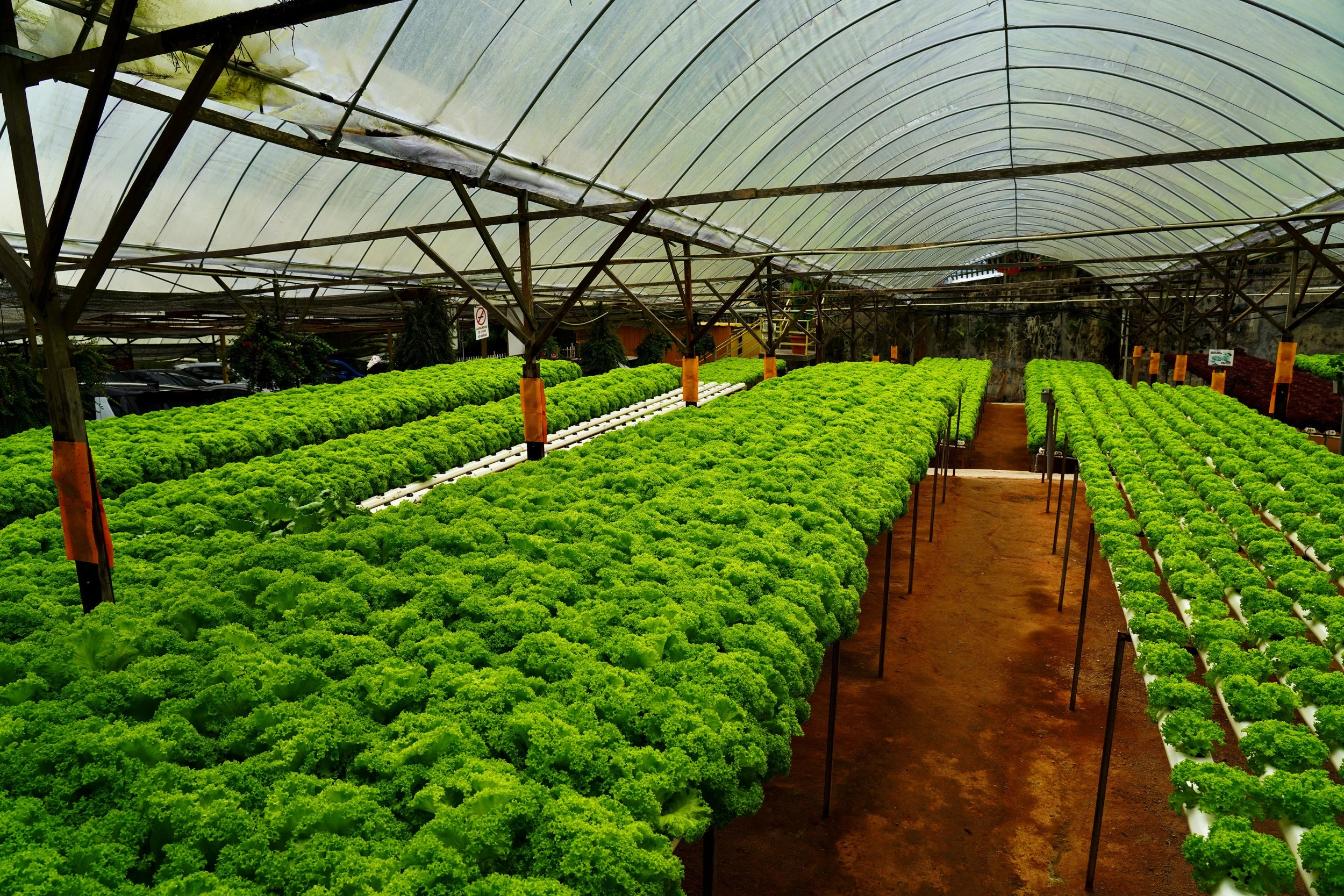
Aquaponics is an agricultural system combining the raising of fish (aquaculture) and growing of plants without soil (hydroponics) in a single, closed-loop ecosystem. Urban agricultural advocates and researchers believe Aquaponics is a severely underutilized tool capable of solving localized food insecurity while conserving the planet's most critical resources.
Because global hunger persists in vulnerable regions where conventional farming fails due to severe resource limitations, aquaponics offers a direct solution. According to a 2019 global assessment, global population growth has altered 75% of Earth’s land surface, accelerating land scarcity and resource strain.
Aquaponics operates intensively to produce high volumes of plant crops and animal protein (fish) in compact spaces, solving two major problems in modern-day farming: extreme land scarcity and rapid global population growth.
With Aquaponics, you can create modular, portable systems that can be established almost anywhere. This includes urban centers, degraded land or arid climates — shortening supply chains and strengthening local food security, directly supporting the United Nations Sustainable Development Goals (SDGs) number 1 and 2: No Poverty and Zero Hunger.
Thanks to its recirculation system, aquaponics produces equivalent crop yields to conventional agriculture while using 90% to 97% less water than conventional methods.
Along with the reduction in water consumption, aquaponics’ closed-loop structure aids in eliminating toxic agricultural runoff and water contamination (eutrophication) caused by standard farming.
The aquaponics system’s complete control over water and nutrients ensures production free from chemical residues and external soil contaminants and incorporates biosecurity procedures to meet human nutritional needs. These controls leave a smaller environmental footprint than industrial farming.
Yet, despite its promise in solving resource strain and food insecurity, commercial aquaponics faces strong criticism regarding whether a fish-based system is worth it.
Critics believe the high initial startup costs for equipment such as indoor facilities, pumps, tanks and greenhouses present a high barrier to entry compared to traditional land-based farming.
However, unlike traditional farms yielding a single crop, aquaponics yields two commercial products simultaneously (high-value cash crops and protein/fish) from the same footprint, accelerating return on investment.
There are also concerns about the continuous energy needed for industry-level aquaponic systems' water pumping, lighting, filtration and climate control, which drives up operational costs.
Commercial aquaponics paired with solar power and waste-heat recovery, drastically cuts utility costs. It eliminates traditional soil inputs (fertilizers and pesticides), making large-scale systems more cost-effective over time.
Although critics remain, Aquaponics represents a fundamental shift in how humanity approaches food sovereignty, and is a practice that should be given more attention on a commercial level.
While skeptics highlight the initial capital required to move beyond soil-bound agriculture, the cost through rising food prices, land degradation, eutrophication and severe water crises is vastly higher.
The challenge facing global food production now is a matter of resource intelligence, not yield.
If governments and private investors prioritize sustainability through the use of aquaponics, the solution to a zero-waste future could be feeding the world.